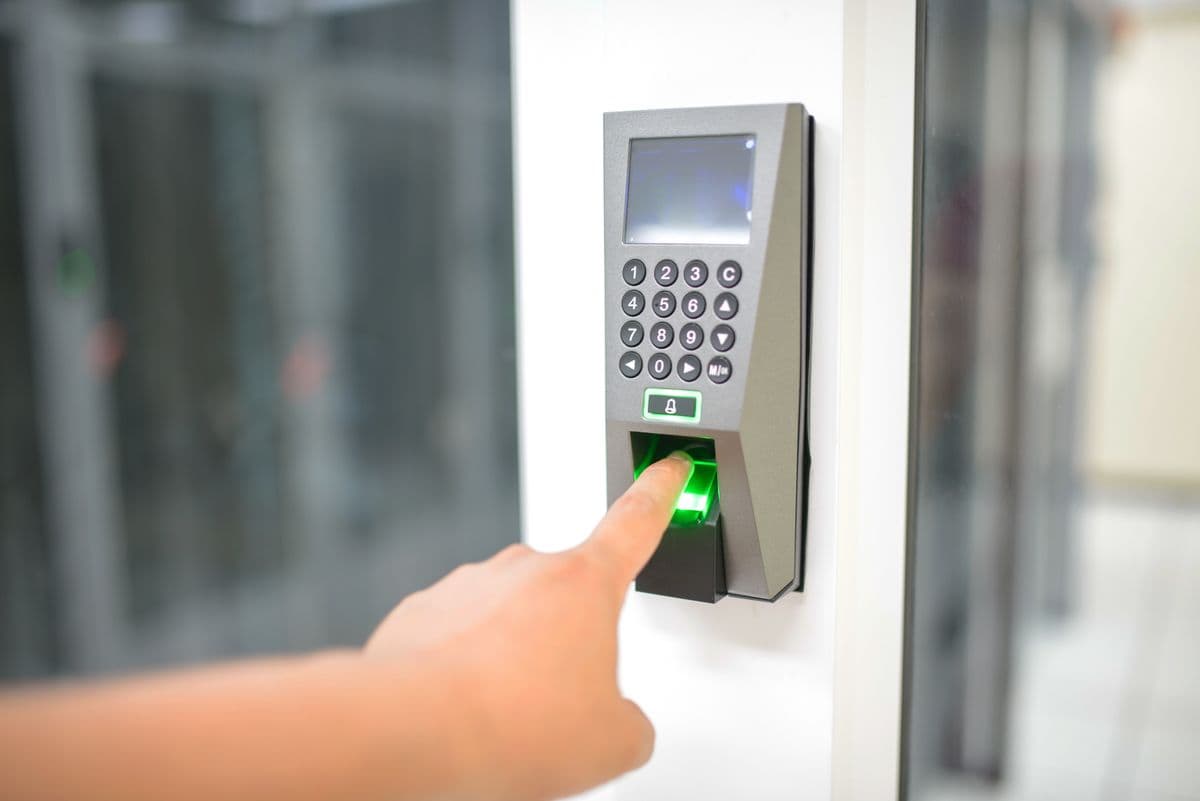
Securing Critical Data Rooms in Uganda: Biometric Access
Multi-factor biometric access control for Uganda data centers. Fingerprint, facial recognition, and PIN security for server rooms and critical infrastructure.

Design considerations
- Single-factor keycard access leaves data rooms vulnerable—multi-factor biometric systems combining PIN + fingerprint/facial scan reduce unauthorized access risk by 99.7%.
- Uganda's Data Protection and Privacy Act requires audit trails for all data room access events, with penalties for non-compliance including license revocation.
- Layered security with vestibule design, environmental monitoring, and video surveillance creates comprehensive protection that meets NITA-U compliance requirements.
Data centers and core server rooms require strict physical security to protect sensitive company information. Relying on simple keycards leaves your facility vulnerable if a card is lost or stolen. High-security spaces use multi-factor setups, combining a required PIN code with an active fingerprint or facial scan. This dual-verification design ensures only authorized IT staff can access critical data infrastructure.
In Uganda's growing digital economy, data centers and server rooms house increasingly valuable business assets—from customer data and financial records to intellectual property and operational systems. The physical security of these spaces is fundamental to overall business security.
Critical Data Room Security Requirements
Understanding specific security requirements helps organizations design appropriate protection strategies:
Access Control Requirements
Physical access control for data rooms must prevent unauthorized entry while maintaining detailed audit trails of all access attempts. Every entry—whether successful or denied—should be logged with timestamp, identity verification method, and location data. For Uganda's organizations subject to data protection requirements, these audit trails provide essential compliance documentation.
Multi-factor authentication requirements for data rooms typically exceed those for general office areas. The combination of two or more independent verification factors—something you know (PIN), something you have (card), and something you are (biometric)—creates security that significantly reduces unauthorized access risk.
Environmental Monitoring
Temperature, humidity, and airflow monitoring protect sensitive equipment while providing early warning of environmental issues. For Uganda's tropical climate, where temperature and humidity variations affect equipment performance, environmental monitoring is particularly important.
Video Surveillance Integration
High-resolution cameras capture entry attempts and access events, creating visual records that complement electronic audit trails. For Uganda's data centers, comprehensive video surveillance enhances security effectiveness and provides evidence for incident investigations.
Multi-Factor Authentication Architecture Design
Authentication Factor Combinations
| Combination | Security Level | User Experience | Best For |
|---|---|---|---|
| PIN + Fingerprint | High | Fast | General data rooms |
| Card + Facial Recognition | High | Touchless | Hygiene-conscious facilities |
| PIN + Card + Biometric | Maximum | Multi-step | Highest-security applications |
Sequential verification—where each factor must be successfully presented before the next is requested—provides clear user guidance. For Uganda's data centers with varying user technical abilities, clear, intuitive workflows are essential.
Integration with Existing Infrastructure
Multi-factor data room authentication should work seamlessly with building-wide access control systems. This integration allows consistent security policies across the facility while providing enhanced protection for critical areas. For Uganda's data centers within larger commercial buildings, this integration simplifies overall security management.
Failover and Recovery Procedures
System failures, biometric recognition difficulties, and emergency situations all require defined procedures that maintain security without preventing authorized access. For Uganda's data centers, where 24/7 operation is essential, robust failover procedures are critical.
Biometric Technology Selection
Fingerprint Recognition
Fingerprint recognition provides proven, cost-effective biometric verification suitable for many data room applications. Modern fingerprint readers achieve accuracy rates above 99.5% and operate reliably in controlled data center environments. For Uganda's data centers with stable environmental conditions, fingerprint technology offers excellent performance and value.
| Feature | Specification |
|---|---|
| Accuracy | 99.5%+ |
| False Acceptance Rate | 0.001% |
| Response Time | <1 second |
| Cost per Reader | Varies by model and vendor |
Facial Recognition Technology
Facial recognition offers touchless authentication that appeals to organizations concerned about hygiene and user convenience. Advanced 3D facial recognition systems provide high accuracy and resistance to spoofing attempts. For Uganda's data centers seeking cutting-edge security, facial recognition provides compelling capabilities.
Iris Recognition
Iris recognition provides the highest accuracy levels among commercially available biometric technologies. The unique patterns of the iris are stable throughout life and extremely difficult to replicate, making iris recognition suitable for the most sensitive data room applications.
Multi-Modal Biometric Systems
Combining two or more biometric modalities—such as requiring both fingerprint and facial verification—ensures that compromise of a single biometric factor does not grant access. For Uganda's data centers with the most stringent security requirements, multi-modal systems provide maximum protection.
Physical Layout and Installation Design
Entry Vestibule Design
A controlled transition zone between general data center areas and sensitive server rooms accommodates multi-factor authentication equipment while providing space for security procedures. For Uganda's data centers, vestibule design must consider both security requirements and equipment cooling needs.
Reader Placement
Biometric readers must be positioned for optimal sensor performance while maintaining comfortable user interaction. Reader height and angle adjustments accommodate various user characteristics.
Cabling and Connectivity
Redundant communication paths prevent single points of failure from compromising security. For Uganda's data centers where network reliability is critical, robust cabling infrastructure is essential.
Integration with Data Center Infrastructure
Access Control System Integration
Connects multi-factor authentication with building-wide security infrastructure, ensuring consistent security policies and centralized management.
Environmental Monitoring Integration
Links access control with temperature, humidity, and airflow monitoring systems. This integration can trigger alerts or access restrictions based on environmental conditions.
Video Surveillance Integration
High-resolution cameras record entry attempts and successful access, creating visual audit trails that complement electronic records.
Building Management System Integration
Fire alarms, security alerts, and environmental issues can trigger appropriate access control responses, such as emergency lockdowns or evacuations.
Audit Trail and Compliance Requirements
Data Collection Requirements
Audit data should capture all access events including successful entries, denied attempts, and system anomalies. Each event should include timestamp, authenticated identity, authentication method, and location data.
Retention Policies
Critical data room audit data should typically be retained for periods matching regulatory requirements. For Uganda's data centers, retention periods of 1-7 years are common, depending on applicable regulations.
Compliance Reporting
Pre-configured reports for common compliance frameworks simplify audit preparation. For Uganda's data centers seeking NITA-U certifications or meeting regulatory requirements, these reporting capabilities provide significant value.
Common Implementation Challenges and Solutions
User Acceptance
Comprehensive training and communication about security benefits help build acceptance. Employees accustomed to single-factor authentication may resist additional security measures initially.
Environmental Challenges
Temperature variations and electromagnetic interference can affect biometric sensor performance. Selecting equipment rated for data center environments and implementing appropriate shielding addresses these challenges.
Integration Complexity
Legacy systems, proprietary protocols, and limited documentation create technical challenges. Working with experienced integrators familiar with Uganda's data center environments helps navigate these complexities.
Conclusion and Implementation Guidance
Multi-factor biometric security for critical data rooms represents essential protection for Uganda's organizations as digital assets become increasingly valuable. The combination of multiple authentication factors provides security levels that single-factor systems cannot match.
Successful implementation requires careful planning, appropriate technology selection, and professional execution. From designing authentication workflows to integrating with existing data center infrastructure, each element must be implemented with attention to security best practices and local requirements.
Backspace Business Solutions specializes in critical infrastructure security, including multi-factor biometric access control systems for data centers and server rooms. Contact us today to discuss your data room security needs.
Request Free Site Survey to schedule a security assessment.
Frequently Asked Questions
What biometric technologies are available for access control?▼
How accurate are biometric access control systems?▼
Can biometric access control integrate with existing security systems?▼
What happens if a biometric reader fails?▼
Are biometric systems compliant with privacy regulations?▼
Continue reading
More articles in Biometric Access Control →