Choosing a Power Backup Partner in Uganda: UPS, Generator & ATS
How to evaluate a power backup partner in Uganda: UPS sizing, generator + ATS integration, battery replacement SLAs, response times and 5-year total cost benchmarks.
What matters in practice:
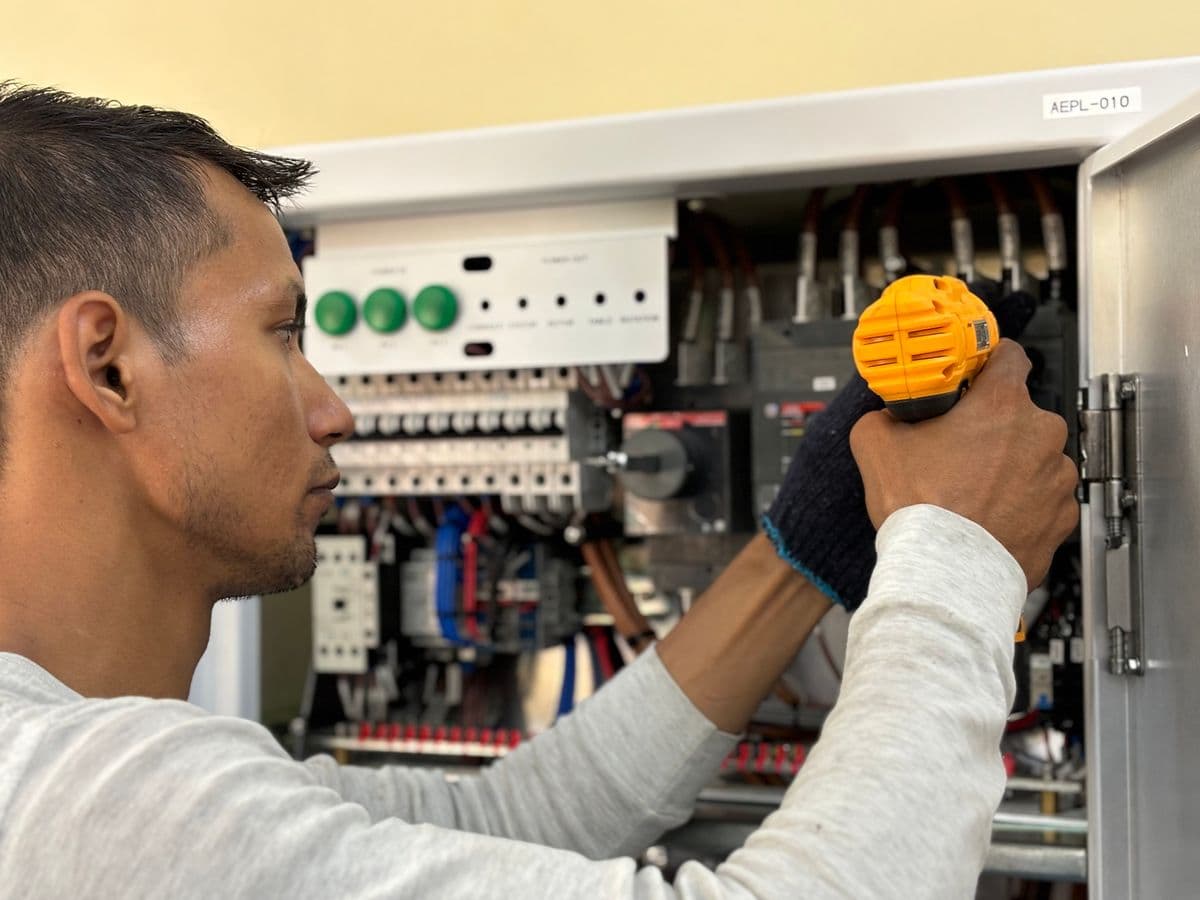
- Judge the load audit, not the brochure: a partner that sizes your UPS and generator from a written load schedule with headroom is worth more than one that quotes by floor area
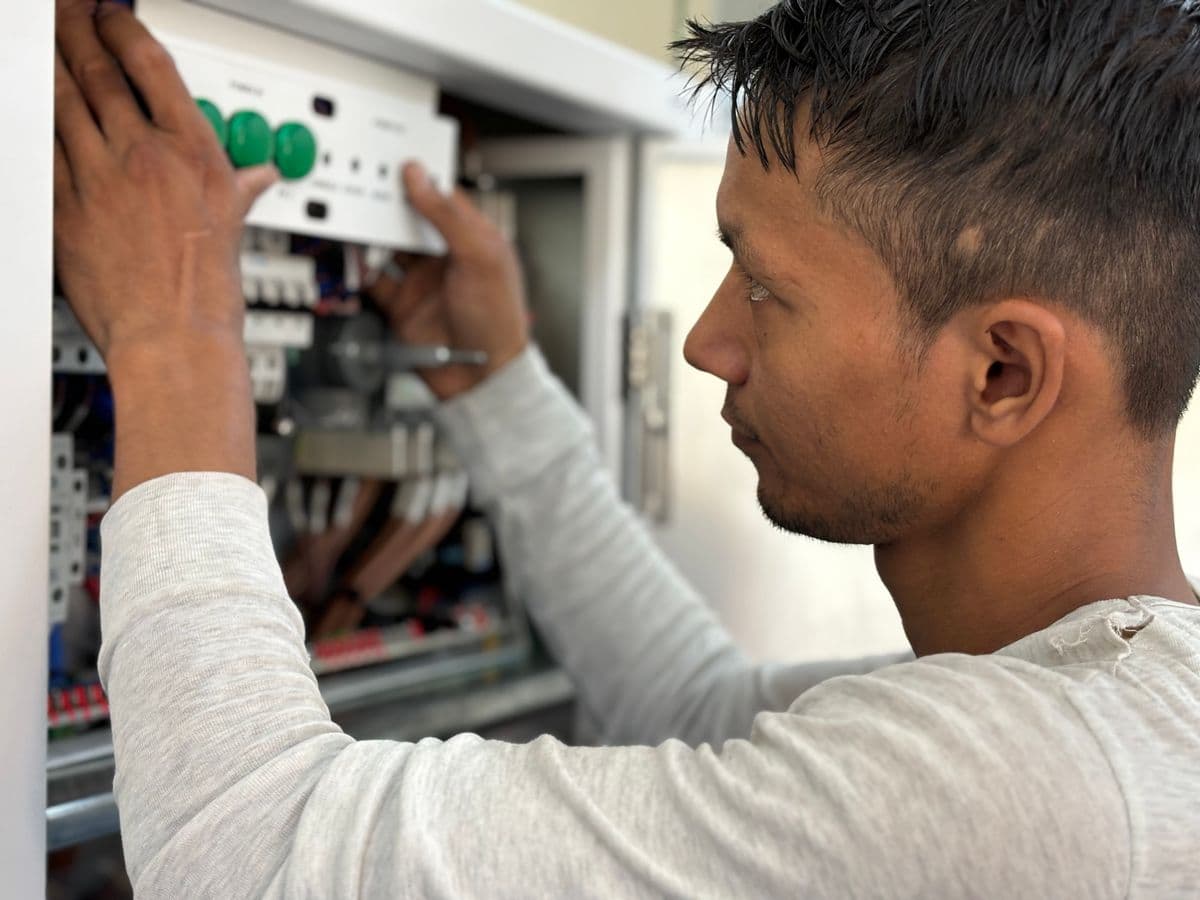
- UPS and generator are one system: without a properly specified automatic transfer switch and commissioning test, your generator may start while the UPS fails - or never start at all
- Battery replacement SLA decides uptime: VRLA batteries die in 3-5 years regardless of brand; the partner who plans the swap before failure keeps your servers running
In Uganda, backup power is not an optional upgrade - it is the difference between a business that closes at the first outage and one that trades through it. The equipment market is full of options: online UPS units, line-interactive UPS, diesel generators, hybrid solar inverters, automatic transfer switches. The scarce thing is a partner who can size, install, integrate, and maintain all of it as one coherent system.
This guide covers how to evaluate a power backup partner across the full stack - UPS, generator, ATS, and maintenance - with comparison matrices, response-time SLA benchmarks, and 5-year cost figures you can use to compare proposals.
Pricing note: Figures reflect typical 2026 market rates in Uganda. Confirm current pricing before budgeting.
Why Partner Selection Beats Product Selection
Direct Answer: A power backup partner should be evaluated on five weighted criteria: load audit quality (20%), UPS and generator sizing discipline (20%), installation and ATS integration standards (20%), maintenance and battery replacement SLA (25%), and 5-year total cost of ownership (15%). Partners that skip the load audit, omit the ATS commissioning test, or quote no battery replacement plan should be disqualified regardless of equipment price.
Two businesses can buy identical equipment and get opposite results. The difference is the partner: whether they measured actual loads, sized runtime honestly, wired the ATS correctly, tested the changeover under load, and scheduled battery replacements before the batteries fail.
Start with sizing discipline in our UPS sizing guide for enterprises, then use this article to compare the partners bidding on your project.
The Full Backup Stack You Are Buying
| Layer | What It Does | Failure If Specified Poorly |
|---|---|---|
| UPS | Ride-through for outages, conditioning of dirty mains | Runtime far shorter than promised; UPS drops load at transfer |
| Generator | Extended runtime for outages beyond minutes | Undersized for inrush current; wet stacking from light loads |
| ATS | Automatic changeover between mains, UPS bypass, generator | Generator starts but never picks up load; manual babysitting |
| Distribution | Breakers, surge protection, grounding | One surge takes out the whole protection chain |
| Maintenance | Testing, battery swaps, fuel planning | Everything above fails at the first real outage |
Our generator and ATS installation guide details the integration standards that separate a working system from a generator that sits idle during a blackout.
Comparison Matrix: How Partners Differ
| Evaluation Criterion | Strong Partner | Weak Partner |
|---|---|---|
| Load audit | Written schedule of critical vs non-critical loads, measured with clamp meter | Estimate based on square meter or "add 30% for safety" only |
| UPS sizing | Online topology for servers; runtime stated per load (e.g., 20 min at 8 kW) | Line-interactive quoted for server rooms; runtime not stated |
| Generator sizing | Sized for starting kVA of motors, not just running kW; fuel runtime calculated | Sized to running load only; no diversity factor |
| ATS integration | ATS tested under load during commissioning, with changeover timing documented | ATS listed as separate line item; "plug and play" claim |
| Battery plan | Replacement year flagged at handover; pre-stocked for common models | Battery type not discussed; "sealed, maintenance-free" and nothing more |
| Service SLA | Written response times, quarterly preventive visits, service report each visit | "Call us when it fails" |
| Documentation | Single-line diagrams, as-built drawings, test records | No drawings; knowledge sits with one engineer |
Score each bidder 1-5 against the matrix, weight the rows by what your facility actually depends on, and compare totals rather than headlines.
Sizing Discipline: What a Proper Assessment Looks Like
A credible partner delivers, before pricing:
- Load inventory - every critical circuit: servers, switches, NVRs, POS terminals, medical equipment, lighting zones
- Measured demand - clamp-meter readings during peak, not nameplate stickers
- Critical vs non-critical split - only critical loads get UPS runtime; the rest can ride the generator
- Runtime target - typically 15-30 minutes of UPS runtime to bridge to generator start, not hours
- Headroom - 25-30% growth allowance so year-three additions do not overload the UPS
Indicative 2026 UGX benchmarks for the equipment itself:
| Configuration | Typical UGX Range (Installed) |
|---|---|
| 3 kVA online UPS, 20 min at ~1.5 kW | 2,800,000 - 4,500,000 |
| 6 kVA online UPS, 20 min at ~3 kW | 5,500,000 - 9,000,000 |
| 10 kVA online UPS with external battery bank | 9,000,000 - 16,000,000 |
| 10 kVA diesel generator, installed, with ATS | 13,000,000 - 22,000,000 |
| 20 kVA diesel generator, installed, with ATS | 22,000,000 - 38,000,000 |
| 60 kVA generator, installed, with ATS and canopy | 55,000,000 - 95,000,000 |
| ATS supply and commissioning (standalone) | 1,800,000 - 4,500,000 |
For the math behind these numbers, our enterprise UPS runtime budgeting guide shows how runtime targets drive battery bank size.
Response Times and Maintenance SLAs
Maintenance is where partners genuinely separate. Ask for these commitments in writing:
| SLA Element | Bronze | Silver | Gold (Critical Facility) |
|---|---|---|---|
| Emergency response | Next business day | 8 hours | 4 hours |
| After-hours response | 48 hours | 24 hours | 4-8 hours |
| Preventive maintenance | Annual | Twice yearly | Quarterly |
| Battery load test | Every 2 years | Yearly | Every 6 months |
| Annual contract cost | 6-8% of equipment value | 9-11% | 12-15% |
| Annual contract (UGX, ~UGX 15M system) | 900,000 - 1,200,000 | 1,350,000 - 1,650,000 | 1,800,000 - 2,250,000 |
Battery replacement planning deserves special attention. VRLA batteries in Kampala's heat typically last 3-5 years; plan replacement at year 4. A quality partner flags the expected replacement date at commissioning, stocks common models locally, and quotes the swap in advance - a 6 kVA UPS bank replacement runs UGX 1,200,000 - 2,500,000 depending on capacity. Lithium-ion options cost more upfront (see our lithium vs lead-acid comparison) but stretch replacement intervals to 8-10 years.
5-Year Total Cost Benchmarks
Illustrative scenario: an office with an 8 kW critical load, 6 kVA online UPS, and 10 kVA generator with ATS.
| Cost Element | Years 1-5 (UGX) |
|---|---|
| UPS (6 kVA) with battery bank | 7,000,000 |
| Generator (10 kVA) with ATS, installed | 17,000,000 |
| Installation, cabling, commissioning | 2,500,000 |
| Service contract (Silver, ~10%) | 6,500,000 |
| Battery replacement (year 4) | 1,800,000 |
| Annual servicing parts, fuel filters, oil | 1,500,000 |
| 5-year TCO | 36,300,000 |
Equipment is roughly half the story. A cheap supplier with no service contract often ends up costing more by year five than a properly specified system - because downtime, emergency call-outs, and premature replacements are priced at emergency rates.
Questions to Ask Every Power Backup Partner
- Show me the load schedule your quote is based on.
- What is the guaranteed UPS runtime at my critical load, in minutes?
- Will the ATS changeover be tested under load during commissioning, and will I receive the test record?
- When are my batteries due for replacement, and how long does a swap take?
- What are your written response times for a 2am failure?
- Can you provide references from facilities of similar criticality?
Q: Should I buy the UPS and generator from the same company?
A: Preferably yes, or at least have one party own the integration. The ATS, synchronization, grounding, and commissioning tests are where single-supplier responsibility pays for itself. Splitting supply usually ends with each vendor blaming the other during a failed changeover.
Q: How do I know if my generator is properly sized?
A: Ask for the calculation in writing: starting kVA of the largest motor, running kW total, diversity factor, and required fuel runtime. If the vendor cannot show you the math, the number came from a price list, not an engineering review.
Q: What runtime should a UPS give my server room?
A: For most Kampala offices, 15-30 minutes at full critical load is the right target - long enough to bridge to generator start or to shut down safely during an extended outage. Battery banks sized for hours of runtime are usually wasted money; the generator is the long-duration layer.
Q: How often should generator servicing happen?
A: For standby generators: service every 250 running hours or 6 months, whichever comes first, plus load-bank testing annually. Ask whether your service contract includes oil, filters, coolant, and battery replacement - policies that exclude consumables inflate running costs later.
Get a Load Audit From a Power Partner
Backspace Business Solutions handles power audits, UPS supply, generator and ATS integration, and maintenance contracts as one accountable system. Explore our Power Infrastructure services or request a free site assessment to get a load-audited proposal with written SLAs. Prefer to talk first? Message us on WhatsApp at https://wa.me/256786394913.
Frequently Asked Questions
Continue reading
More articles in Power Infrastructure →Not sure which of this applies to you?
Reading about a problem is not the same as knowing what yours actually is. The Solution Advisor asks a few questions about your environment and gives you a preliminary technical interpretation — what to check first, and what can probably wait.
Follow Backspace
Field notes from live projects in Kampala and beyond — new guides, failure post-mortems and pricing updates. Pick the channel you use.