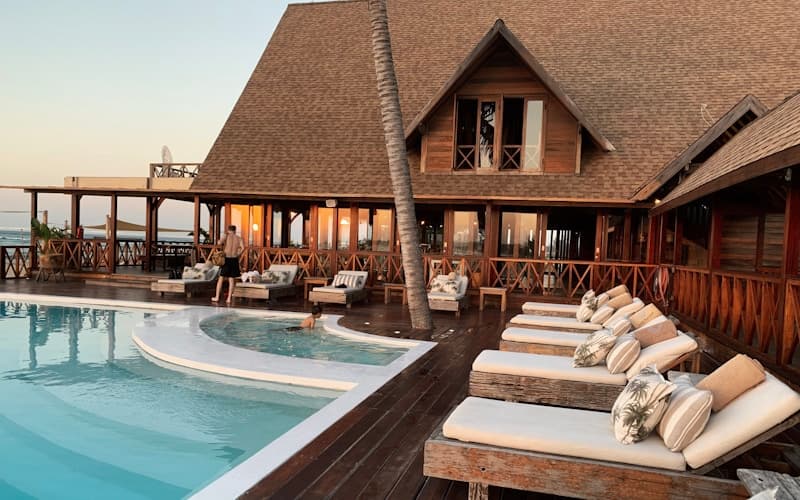
Satellite Backup for Hotels in Uganda: LTE & Starlink
Hotel internet backup for Uganda: LTE failover, Starlink satellite, and multi-WAN design so bookings, payments, and guest WiFi stay online.
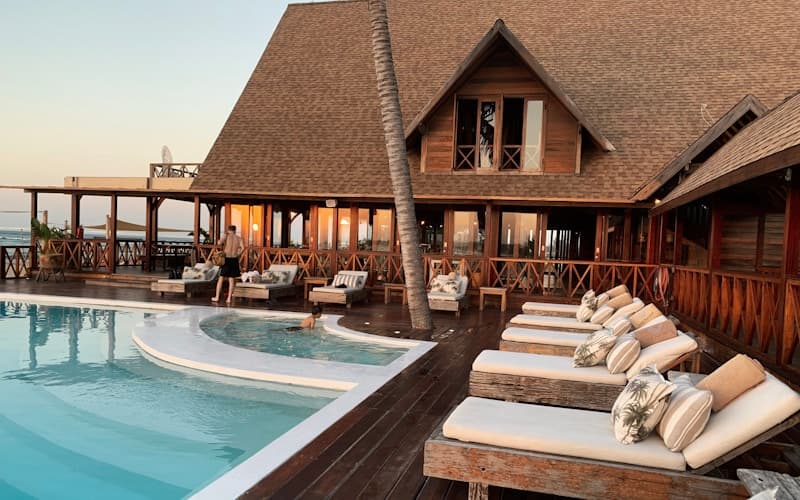
Key Takeaways for Decision-Makers:
- A second connection is not redundancy on its own — diverse paths, a multi-WAN router, and tested failover are what keep the hotel online.
- For Kampala and urban hotels, LTE/5G failover is the fastest, cheapest layer; Starlink — licensed in Uganda since May 2026 — suits remote and safari properties.
- One outage takes reception, card payments, key cards, guest WiFi, and CCTV offline together. Budget internet backup as revenue protection, not IT expense.
When the internet drops at a hotel, the damage is rarely limited to browsing. Reception cannot check guests in, card terminals cannot settle payments, key cards will not encode, the channel manager stops syncing bookings, and guest WiFi — the amenity that shows up in reviews first — goes dark. This guide covers internet backup for hotels in Uganda: LTE failover, satellite backup with the newly licensed Starlink service, and the multi-WAN design that ties them together.
When the Internet Goes Down at a Hotel
Systems That Depend on One Connection
Most hotels run critical operations over the same internet line that serves guests:
- Reception and PMS — cloud-based property management systems lose availability; check-in stalls at the front desk
- Card payments — POS terminals fall back to offline mode at best, and decline at worst
- Booking channels — OTA reservations stop syncing, risking overbookings when the line returns
- Key card encoding — electronic locks depending on the PMS cannot issue or renew cards
- CCTV — remote viewing and cloud recording stop while the site is unattended
- Guest WiFi and streaming — the reviews mention this within hours, not days
Why Reviews Make It a Revenue Problem
Guests rate hotels on WiFi quality the way they rate cleanliness. A single evening of dead connectivity during peak occupancy produces one-star reviews that outlive the outage. For properties competing on booking platforms, the recovery cost of a bad review cycle is far larger than the cost of a backup link.
Ugandan hotels face real outage exposure: fibre cuts during road works, last-mile maintenance windows, and power interruptions that take provider equipment down with the grid. Treating a single ISP line as a single point of failure is a business risk, not a technical preference.
Backup Options for Hotels in Uganda
| Option | Typical performance | Failover behaviour | Best for |
|---|---|---|---|
| Second fibre (different provider) | Full speeds | Seconds with multi-WAN | Urban hotels with two carriers available |
| LTE / 5G failover | Tens of Mbps, plan-dependent | Seconds, automatic | Baseline for every Kampala hotel |
| Starlink (LEO satellite) | 20–100 Mbps | Minutes to establish, then stable | Remote, safari, and lakeside properties |
| Traditional VSAT | Low bandwidth, high latency | Manual or scheduled | Sites with no terrestrial alternative |
| Fixed wireless | Line-of-sight dependent | Seconds | Dense urban sites without fibre diversity |
Second Fibre From a Different Provider
The strongest backup is a second fibre line from a different ISP — provided the paths are genuinely diverse. Two cables entering the property through the same duct or along the same road fail together when a contractor cuts the route. When evaluating a second line, ask carriers to confirm the physical path into the building.
LTE and 5G Failover
For most hotels in Kampala, an LTE or 5G backup is the right first layer: it installs in days, needs no civil works, and a multi-WAN router switches to it within seconds of the primary line failing. Capacity depends on the plan and local coverage, which is enough to keep reception, payments, POS, and CCTV running — and to carry prioritised guest traffic until fibre returns.
Starlink Satellite Backup
Satellite backup for hotels has changed with Starlink. After operating without a licence, Starlink was shut down in Uganda in January 2026; the Uganda Communications Commission signed an operating licence agreement with Starlink in May 2026, and licensed providers began offering the service to enterprise customers from August 2026. The licence requires a national gateway in Uganda and registration of every terminal activated locally.
For hospitality, that makes low-earth-orbit satellite a legitimate option for properties beyond fibre reach — safari lodges, lakeside resorts, and construction-phase hotels — delivering the same 20–100 Mbps class of service already used by remote offices in Uganda. It complements rather than replaces terrestrial links: terminals need clear sky view, and fair-use policies apply, so pair it with LTE for a layered defence.
When VSAT Still Makes Sense
Traditional satellite remains a fallback for sites with no fibre and unreliable cellular coverage. Its latency makes voice and video painful, so use it as a last-resort bearer for payment and PMS traffic rather than guest internet.
Designing the Failover
Hardware decides whether backup links actually work. A multi-WAN router or SD-WAN appliance should provide:
- Automatic failover — health checks on the primary line, with switchover in seconds rather than minutes
- Session persistence — active payments, VoIP calls, and VPN tunnels should not drop the moment the line changes
- Policy routing — send PMS, payments, and CCTV to the most reliable link; give guest traffic whatever remains
- Load balancing (optional) — combine links in normal operation to raise total capacity, while keeping failover armed
- Monitoring and alerts — know about an outage before guests report it, and log every failover event for review
Failover should be tested on a schedule — quarterly at minimum — because an untested backup is an assumption. During the test, verify that POS terminals settle, the PMS reconnects, and CCTV recording resumes on the backup path.
For the full network architecture around this design, see our network infrastructure services.
Bandwidth: Size the Primary, Then the Backup
Backup sizing follows primary sizing. A 100-room hotel should plan for 200–500 Mbps on the primary line, as set out in our hotel WiFi solutions guide — and the backup only has to carry the traffic that keeps the property operating:
- PMS and channel-manager sync: minimal
- Card payments and POS: minimal, business-critical
- CCTV remote viewing and cloud upload: moderate
- Guest WiFi during an outage: heavy — either throttle it or accept slower service until the fibre returns
The hospitality IT network checklist covers the wider inventory of what runs on the connection, and our hotel IT setup guide specifies backup connectivity as part of a complete deployment.
What to Ask an ISP Before Signing
- SLA and remedies — uptime commitments with credits, not best-effort wording
- Fair-use policy — unlimited means unlimited, or the cap is written down
- Diverse entry path — confirm how the cable reaches the building, especially for the "redundant" line
- Static IP and inbound connections — needed for CCTV, VoIP, and off-site management
- Support response — a named contact and a published out-of-hours number for a hotel that never closes
- Install lead time — how many days until the backup line carries traffic
How Backspace Designs Internet Backup for Hotels
We start with a site survey: what runs on the connection today, how the cables enter the building, and which providers offer genuine path diversity at the property. From there we design the multi-WAN architecture, install and configure the failover hardware, prioritise critical traffic, and document the failover test so your team can run it without us.
The same team delivers the WiFi, structured cabling, and network infrastructure the backup sits behind — one design, one accountable party. If you are planning a new property, our hotel IT services page covers the full deployment.
Frequently Asked Questions
Is Starlink allowed in hotels in Uganda?
Yes. Starlink signed an operating licence agreement with the Uganda Communications Commission in May 2026, and licensed providers have offered the service to enterprise customers since August 2026. Terminals must be registered locally and traffic routes through a national gateway, as required by the licence.
What is the best internet backup for a Kampala hotel?
An LTE or 5G failover link behind a multi-WAN router, ideally alongside a second fibre line from a different provider with a diverse physical path into the building. Satellite is for properties beyond reliable terrestrial coverage.
How fast should failover be?
Seconds. Payment terminals, VoIP calls, and cloud PMS sessions should survive the switch. Any failover slower than a minute will drop active sessions and generate guest complaints.
Does a backup connection need its own WiFi network?
No. The hotel's access points stay the same; the backup changes how traffic reaches the internet. What does need attention is traffic priority — critical systems should be first in the queue when the backup link is carrying the load.
Frequently Asked Questions
What IT solutions are essential for hotels and restaurants?▼
How can I improve guest WiFi experience in my hotel?▼
What is a Property Management System (PMS)?▼
How do I secure guest data in hospitality IT systems?▼
Can hospitality IT systems integrate with online booking platforms?▼
Continue reading
More articles in Hospitality IT →Not sure which of this applies to you?
Reading about a problem is not the same as knowing what yours actually is. The Solution Advisor asks a few questions about your environment and gives you a preliminary technical interpretation — what to check first, and what can probably wait.
Follow Backspace
Field notes from live projects in Kampala and beyond — new guides, failure post-mortems and pricing updates. Pick the channel you use.