Structured Cabling vs Wireless: Kampala Office Guide
Structured cabling vs wireless for Kampala offices. Compare speed, reliability, security, and 5-year TCO. Hybrid recommendations for Ugandan businesses.
Key Takeaways for Decision-Makers
- Structured cabling delivers dedicated 1–10 Gbps per device with sub-millisecond latency; WiFi shares bandwidth across all devices with 5–30ms latency.
- 5-year TCO favors structured cabling for offices with 10+ workstations despite higher upfront costs — 15–20 year lifespan versus WiFi's 3–5 years.
- Hybrid deployment — cabling backbone and fixed workstations, WiFi for mobile devices — is the recommended approach for most Kampala businesses.
Choosing between structured cabling and wireless networking is one of the most important decisions for any office in Kampala. Both technologies have distinct advantages, and the right choice depends on your business needs, budget, and growth plans.
Many businesses in Uganda go wireless-only to save money, only to discover performance and reliability issues that hurt productivity. Understanding the strengths and weaknesses of each approach helps you build a network that truly serves your business.
Understanding Structured Cabling
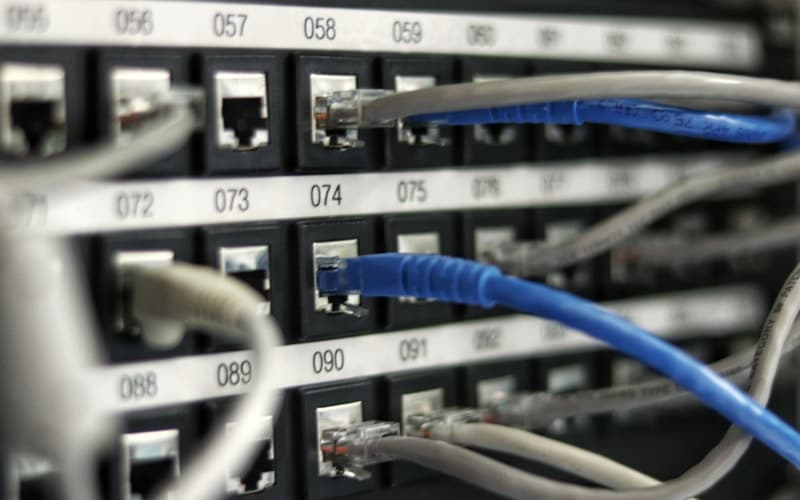
Structured cabling uses physical cables to connect devices to your network. This involves installing copper or fiber optic cables through walls, ceilings, and floors, with patch panels and switches managing the connections.
A properly installed structured cabling system provides a dedicated, high-performance foundation for all communications. It follows industry standards (TIA-568, ISO/IEC 11801) that ensure consistent performance and long-term reliability.
Understanding Wireless Networking
Wireless networking uses radio waves to connect devices without physical cables. Access points broadcast signals that devices connect to.
WiFi technology has improved significantly with WiFi 6 and WiFi 6E standards, offering faster speeds and better performance in dense environments. However, it still cannot match the raw performance and reliability of wired connections.
Performance Comparison
Speed
- Structured cabling — Consistent, dedicated speeds of 1 to 10 Gbps depending on cable category. Every device gets its own connection with full bandwidth available at all times.
- Wireless — Shares bandwidth among all connected devices. A WiFi 6 access point advertises 1.2 Gbps theoretical speed, but this is divided among every device. In practice, individual devices achieve 100 to 300 Mbps.
Reliability
- Wired — Not affected by physical obstructions, electromagnetic interference, or neighboring networks. Once installed and tested, it delivers the same performance day after day.
- Wireless — Signals degrade through walls, floors, and furniture. Performance drops when multiple access points operate on the same channel or neighboring businesses use the same frequencies.
Latency
- Structured cabling — Under one millisecond. Critical for video conferencing, VoIP, and cloud-based software.
- Wireless — 5 to 30 milliseconds due to signal processing, encryption, and shared medium access.
Security
- Wired — Physical cables cannot be intercepted remotely; attacker requires physical access to the cable.
- Wireless — Signals broadcast through walls and can be intercepted by anyone within range. WPA3 encryption provides strong protection, but misconfigured networks remain vulnerable.
Cost Comparison
| Factor | Structured Cabling | Wireless |
|---|---|---|
| Initial cost per workstation | UGX 150,000–300,000 | UGX 50,000–100,000 |
| Annual maintenance | UGX 200,000–500,000 | UGX 300,000–600,000 |
| Equipment lifespan | 15–20 years | 3–5 years |
| Total cost of ownership (5 years) | UGX 3–6 million | UGX 4–8 million |
While wireless has lower upfront costs, the total cost of ownership over five years favors structured cabling due to longer equipment life and lower maintenance requirements.
When to Choose Structured Cabling
Structured cabling is the better choice when:
- Fixed workstations with desktop computers and VoIP phones
- Security is a priority due to sensitive data or regulatory requirements
- Bandwidth-intensive applications like video editing or large file transfers
- Consistent, low-latency connections for video conferencing
- Planning to stay in the same location for five or more years
- More than 20 employees requiring reliable network access
When to Choose Wireless
Wireless makes sense when:
- Mostly mobile devices — laptops, tablets, smartphones
- Frequent office reconfiguration or workstation moves
- Tight budget that cannot support structured cabling upfront
- Minimal data transfer needs
- Temporary or seasonal connectivity
- Small office with fewer than 10 employees
The Hybrid Approach
Most modern offices in Kampala benefit from a hybrid approach combining both technologies:
Recommended Hybrid Setup
- Structured cabling for backbone — Connect servers, switches, and access points with cables
- Cable for fixed workstations — Connect desktops, printers, and VoIP phones
- Wireless for mobility — Provide WiFi for laptops, phones, and tablets
- Separate networks — Distinct networks for staff, guests, and IoT devices
Implementation Considerations
Building Type
New construction makes structured cabling installation straightforward. Existing buildings may require more complex cable routing, but professional installers can work around most obstacles.
Office Layout
Open floor plans with fixed desks are ideal for structured cabling. Offices with hot-desking may benefit from a wireless-first approach with minimal cabling.
Growth Plans
If you expect significant growth, investing in structured cabling now saves money later. Running extra cable during initial installation costs far less than retrofitting.
Power Requirements
PoE switches can power devices like IP cameras, access points, and VoIP phones through the same cable that carries data, eliminating separate power adapters.
The Verdict for Kampala Businesses
For most businesses with more than 10 employees, the hybrid approach is the recommended solution. Use structured cabling for your core infrastructure and wireless for mobile devices.
Request Free Site Survey — Our engineers will assess your office and recommend the optimal network configuration for your needs.
Backspace Business Solutions provides network infrastructure services for businesses in Uganda.
Frequently Asked Questions
What is structured cabling and why is it important for businesses?▼
How long does a structured cabling installation take?▼
What cable categories should I use for my office network?▼
How often should structured cabling be inspected?▼
Can structured cabling support both data and voice applications?▼
Continue reading
More articles in Structured Cabling →