Structured Cabling Explained: Components and Benefits
Structured cabling explained in simple terms. Learn about cables, patch panels, racks, and how structured cabling keeps your network running.

Key Takeaways for Decision-Makers:
- Structured cabling uses a hierarchical star topology connecting workstations to patch panels to switches to backbone—a system that reduces single points of failure
- Commercial-grade components (Cat6/Cat6a cable, managed patch panels, Fluke-certified testing) deliver 15–25 years of reliable performance
- Proper cable management and documentation reduce mean time to repair by 80% and extend infrastructure lifespan
What Is Structured Cabling?
Structured cabling forms the backbone of every modern business network. It is a standardized approach to network infrastructure that organizes cables, connectors, and hardware into a reliable, scalable system. For businesses in Kampala and across Uganda, understanding how structured cabling works is essential for making smart technology investments.
Without a properly organized cabling system, businesses face frustrating downtime, tangled wires, and expensive repairs. A well-designed structured cabling solution eliminates these problems by creating a clean, maintainable foundation for all communications.
The system follows industry standards such as TIA/EIA-568 and ISO/IEC 11801, ensuring compatibility across manufacturers and consistent performance. Every component works together as part of a unified system.

Core Components of Structured Cabling
1. Cables
Cables are the physical pathways carrying data signals throughout your building. The three main types:
Unshielded Twisted Pair (UTP)
UTP cables contain four pairs of copper wires twisted together to reduce electromagnetic interference. They are the most common cables used in office environments.
- Cat5e: 1 Gbps at 100m. Basic office applications and VoIP phones
- Cat6: 10 Gbps at 55m. Recommended standard for new installations
- Cat6a: 10 Gbps at 100m. Data centers, high-density offices, bandwidth-intensive applications
Fiber Optic
Fiber optic cables use light signals instead of electrical signals, providing higher speeds and longer distances:
- Single-mode fiber: 100 Gbps over 40km+. Building-to-building connections and long backbone runs
- Multi-mode fiber: 10 Gbps over 550m. Shorter backbone connections within buildings
2. Patch Panels
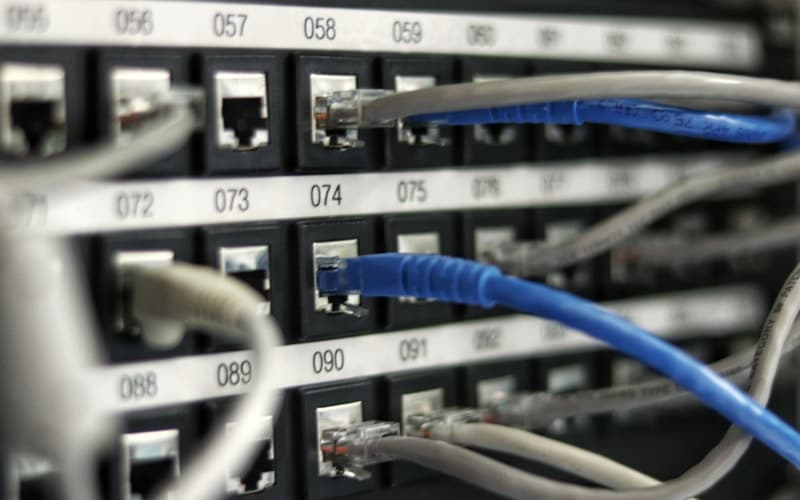
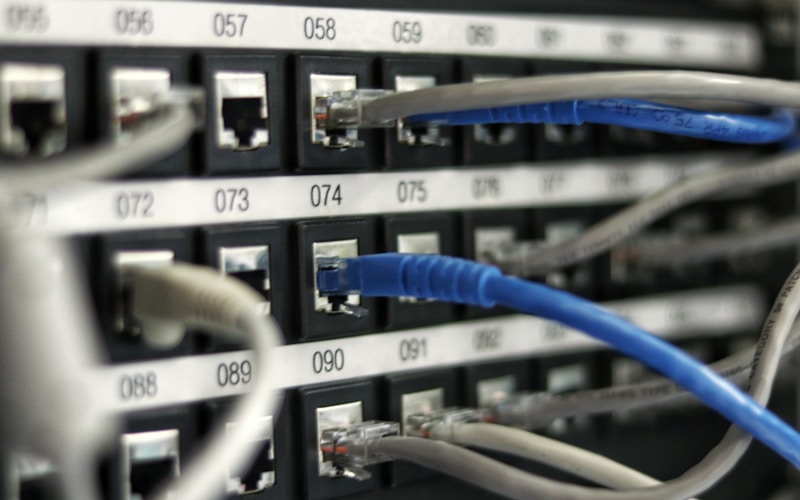
Patch panels serve as the organizational hub of your structured cabling system. Mounted in equipment racks, they provide a central point where all horizontal cables terminate.
Each port on a patch panel corresponds to a specific wall outlet in the building. This organization makes it simple to identify, test, and reconfigure connections without tracing individual cables through walls and ceilings.
Patch panels come in various configurations:
- 24-port models: Standard for small to medium installations
- 44-port models: High-density applications
- Keystone jack panels: Flexibility for mixed cable types
- Built-in cable management: Reduces additional hardware requirements
3. Network Switches
Network switches connect devices on your local area network and direct data to its intended destination. In a structured cabling system, switches connect to patch panels using short patch cables, creating a clean and organized equipment rack.
Modern switches support Power over Ethernet (PoE), delivering both data and electrical power through the same cable. This eliminates separate power adapters for:
- IP cameras
- VoIP phones
- Wireless access points
- Biometric access control readers
4. Server Racks and Cabinets
Server racks provide secure, organized housing for network equipment. Standard 19-inch racks accommodate patch panels, switches, servers, and other equipment in a vertical stack.
| Rack Type | Best For | Features |
|---|---|---|
| Open frame | Climate-controlled server rooms | Easy access, ventilation |
| Enclosed cabinet | Secure environments | Locks, dust protection, fans |
| Wall-mount | Small offices, telecom closets | Space-saving design |
5. Cable Management
Cable management accessories keep installations neat and maintainable:
- Cable trays: Horizontal support for cables along ceilings or walls
- Vertical cable managers: Organization between equipment alongside racks
- Cable ties and Velcro straps: Secure bundles without crushing
- Labeling systems: Identify every cable and connection point
6. Wall Outlets and Faceplates
Wall outlets provide physical connection points at each workstation:
- RJ45 jacks connecting to horizontal cables running back to the telecommunications room
- Single-gang and double-gang faceplate configurations
- Commercial-grade components ensuring reliable connections meeting Cat6/Cat6a performance specifications
How Components Work Together
Understanding component connections reveals the value of structured cabling:
- Horizontal cables run from wall outlets at each workstation back to the telecommunications room on each floor
- Patch panels in the TR terminate all horizontal cables in an organized manner
- Patch cables connect patch panel ports to network switches, distributing connectivity
- Backbone cables connect telecommunications rooms on different floors to the main equipment room
- Equipment room switches connect to the backbone and provide internet and inter-floor connectivity
This hierarchical structure means adding a new workstation requires only one cable from the nearest wall outlet to the telecommunications room. No other changes needed.
Benefits of Structured Cabling
Reliability
Structured cabling follows standardized specifications ensuring consistent performance. Every cable is tested and certified, eliminating the guesswork of ad-hoc installations. Businesses experience fewer outages and more predictable network behavior.
Scalability
Adding new workstations, phones, or devices is straightforward:
- Run a new cable from the nearest outlet to the telecommunications room
- Connect it to an available patch panel port
- No major infrastructure changes required
Reduced Downtime
When issues occur, structured cabling makes troubleshooting fast and efficient:
- Technicians quickly trace cables using labeled connections
- Problems are identified without extensive investigation
- Less downtime and lower repair costs
Cost Savings
While initial investment exceeds informal cabling, structured cabling reduces long-term costs:
- Fewer troubleshooting calls and emergency service visits
- Less downtime impacting productivity
- Easier maintenance with organized, labeled infrastructure
- 15–20 year lifespan making it a sound financial investment
Professional Appearance
Organized cable runs, labeled connections, and neat equipment racks project professionalism to clients and partners. A clean server room also makes IT maintenance and upgrades easier.
Safety Compliance
Professional structured cabling installations comply with fire safety and electrical standards, reducing hazards and protecting your business from liability.
Common Applications
Structured cabling supports:
- VoIP telephone systems: High-quality voice communications over network infrastructure
- Video conferencing: Reliable, low-latency connections for crystal-clear video calls
- Cloud computing: Fast, stable connections to cloud services and applications
- IP surveillance: PoE-powered cameras connected through structured cabling
- Building automation: Control systems for lighting, HVAC, and access control
- Guest WiFi: Enterprise access points connected to wired backbone for reliable coverage
Choosing the Right Components
Selecting components depends on current needs and future plans:
- Basic offices: Cat6 cables with 24-port patch panels provide excellent value
- High-performance environments: Cat6a cables with managed switches deliver maximum speed
- Growing businesses: Plan for two to three times current capacity
- Data centers: Fiber optic backbone with Cat6a horizontal cabling
Testing and Certification
Every installation should include:
- Fluke DSX-8000 certification testing for each cable link
- Certified test reports documenting TIA/EIA-568 compliance
- Digital documentation of all test results and as-built drawings
Without proper certification documentation, manufacturer warranties may be void.
Request a Free Site Survey
Backspace Business Solutions designs and installs structured cabling systems for businesses in Uganda. Our certified technicians use Fluke DSX-8000 test equipment and provide full TIA/EIA-568 compliant installations with manufacturer-backed warranties.
Request Free Site Survey to have our engineers assess your building, recommend the optimal cable architecture, and provide a detailed proposal tailored to your specific requirements.
We specialize in Structured Cabling design, installation, and certification for offices, warehouses, and commercial buildings throughout Kampala. Our CCTV & Biometric integration services leverage your structured cabling infrastructure for IP surveillance and access control systems.
Contact us today to discuss your network infrastructure requirements.
Frequently Asked Questions
What is structured cabling and why is it important for businesses?▼
How long does a structured cabling installation take?▼
What cable categories should I use for my office network?▼
How often should structured cabling be inspected?▼
Can structured cabling support both data and voice applications?▼
Continue reading
More articles in Structured Cabling →