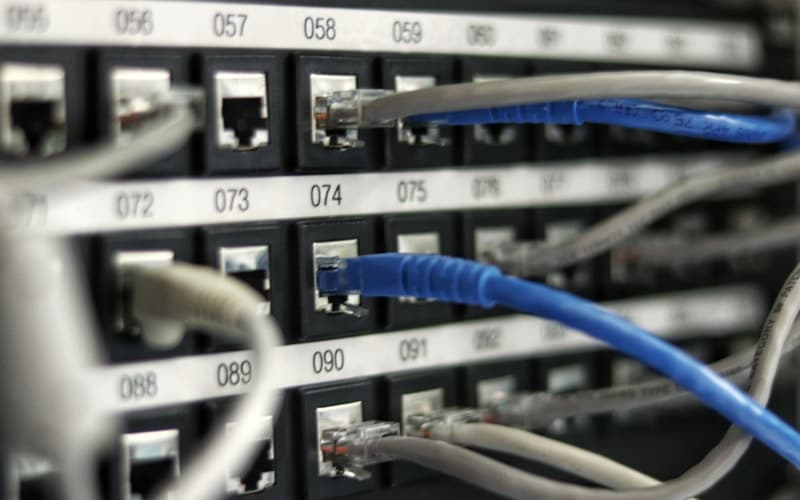
Cat6 vs Cat6A vs Cat7: Cable Architecture Comparison
Compare Cat6, Cat6A, and Cat7 cable standards for Kampala offices. Technical specs, pricing, and selection framework for business network infrastructure.

Key Takeaways for Decision-Makers:
- Cat6 (250 MHz) suits budget-conscious small offices but becomes obsolete within 10–15 years as bandwidth demands increase
- Cat6A (500 MHz) delivers 10 Gbps at 100m with alien crosstalk immunity—the forward-looking choice for most Kampala commercial offices
- Cat7 (600 MHz, S/FTP) is a specialized solution for data centers and high-EMI industrial environments, not standard offices
Selecting the Right Copper Cable Architecture
Designing reliable low-voltage data networks requires selecting matching copper media standards that protect your data throughput targets as operations expand. Every business in Kampala—from startups in Ntinda to corporate headquarters in Kololo—depends on the physical cabling layer to deliver consistent performance.
Choosing the wrong cable category results in bottlenecks, costly re-cabling projects, and lost productivity that directly impacts your bottom line. The physical layer is the foundation upon which every application, service, and digital interaction depends.
This guide provides a comprehensive comparison of Cat6, Cat6A, and Cat7 cable standards with specific reference to the Ugandan market, including technical specifications, real-world performance benchmarks, pricing in UGX, common installation mistakes, and alignment with international standards.
Technical Specifications Comparison
| Metric | Category 6 | Category 6A | Category 7 |
|---|---|---|---|
| Max Data Rate (100m) | 1 Gbps | 10 Gbps | 10 Gbps |
| Max Data Rate (55m) | 10 Gbps | 10 Gbps | 10 Gbps |
| Max Bandwidth | 250 MHz | 500 MHz | 600 MHz |
| Conductor Size | 23 AWG | 23 AWG | 23 AWG |
| Shielding Required | UTP | F/UTP | S/FTP |
| Alien Crosstalk Immunity | Moderate | High | Maximum |
| Lifespan | 10–15 years | 15–20 years | 20–25 years |
| UGX/Meter | 8,000–12,000 | 12,000–18,000 | 20,000–30,000 |
Engineering Differences Between Categories
Category 6: The Baseline Standard
Cat6 was introduced as an improvement over Cat5e, offering tighter twist ratios and improved specifications for crosstalk and system noise. It supports gigabit Ethernet at distances up to 100 meters and can theoretically handle 10 Gbps at distances up to 55 meters—though this is rarely deployed in practice due to alien crosstalk concerns.
The cable typically uses 23-gauge copper conductors and is available in unshielded (UTP) or shielded (F/UTP) configurations. The twist ratio engineering reduces electromagnetic interference between adjacent pairs, but specifications assume relatively moderate bundling densities common in small offices rather than high-density data center installations.
Practical limitations:
- 10 Gbps limited to 55 meters due to alien crosstalk
- Performance degrades in high-density cable bundles
- 10–15 year lifespan before bandwidth demands exceed capability
Category 6A: The Augmented Standard
Cat6A represents a significant leap forward, doubling bandwidth from 250 MHz to 500 MHz and supporting reliable 10 Gbps Ethernet across the full 100-meter channel. The "A" stands for augmented, and the key engineering improvement is the reduction of alien crosstalk.
Cat6A cables achieve this through:
- Thicker insulation reducing coupling between adjacent cables
- Tighter twist pairs minimizing internal crosstalk
- Individual foil shielding around each pair in many designs
The augmented specifications address the fundamental limitation of Cat6 in high-density environments where cable bundles create coupling paths that degrade performance below acceptable thresholds for 10GBASE-T applications.
Practical advantages:
- 10 Gbps at full 100-meter distance
- 500 MHz bandwidth supporting emerging applications
- 15–20 year lifespan with headroom for future standards
- Alien crosstalk immunity for high-density installations
Category 7: The Shielded Specialist
Cat7 is a fully shielded cable standard specifying individual pair shielding and an overall braided shield, achieving 600 MHz bandwidth. While it supports 10 Gbps Ethernet at 100 meters like Cat6A, the additional shielding makes it significantly more expensive and physically larger.
Cat7 is designed for environments with extreme electromagnetic interference:
- Industrial facilities with heavy machinery and variable frequency drives
- Data centers with high-density power distribution alongside data cables
- Buildings with electrical infrastructure in close proximity to data pathways
The Class F channel defined by Cat7 provides alien crosstalk immunity exceeding Cat6A capabilities, but connector complexity and installation requirements make it a specialized solution rather than a general-purpose office cable.
Practical limitations:
- Larger diameter and weight increases pathway requirements
- Higher termination complexity demands specialized technicians
- Connector incompatibility with standard RJ45 infrastructure
- Cost premium rarely justified for office environments
Performance Benchmarks for Kampala Applications
Standard Office Workloads
For corporate environments running typical daily applications, Cat6 provides a reliable baseline:
- Email clients: Minimal bandwidth consumption
- Web browsing: Low sustained throughput
- Standard video conferencing: 5–10 Mbps per stream
- Basic file sharing: Burst traffic, low sustained demand
A typical office workstation rarely exceeds 100 Mbps of sustained throughput, making Cat6 adequate for these workloads.
Bandwidth-Intensive Applications
Cat6A becomes essential when deploying modern enterprise applications:
| Application | Bandwidth Requirement | Recommended Cable |
|---|---|---|
| 4K Video Conferencing | 20–30 Mbps per stream | Cat6A |
| Cloud Applications (Office 365) | Burst traffic, variable demand | Cat6A |
| Real-time Database Queries | Low latency, high throughput | Cat6A |
| iSCSI/NFS Storage | Sustained high throughput | Cat6A |
| Desktop Video Editing | 50–100 Mbps sustained | Cat6A |
| AI/ML Analytics Tools | Variable, bandwidth-intensive | Cat6A |
In a multi-tenant office building in Kampala where dozens of companies share the same physical infrastructure, Cat6A eliminates the alien crosstalk that would otherwise degrade performance.
Specialized Environments
Cat7 finds its application in:
- Data centers hosting high-performance computing clusters
- Financial trading floors requiring microsecond latency guarantees
- Industrial facilities with variable frequency drives and welding equipment
In Uganda's growing data center sector, facilities in the Industrial Area or along the Entebbe corridor often specify Cat7 for connections between server racks where power cables and data cables share overhead pathways.
Ugandan Market Pricing Analysis
Material Costs
| Component | Cat6 (UGX) | Cat6A (UGX) | Cat7 (UGX) |
|---|---|---|---|
| Cable per meter | 8,000–12,000 | 12,000–18,000 | 20,000–30,000 |
| Patch panel (24-port) | 200,000–500,000 | 300,000–600,000 | 400,000–800,000 |
| Keystone jack | 20,000–60,000 | 30,000–70,000 | 50,000–100,000 |
Installed Cost Per Workstation
| Cost Component | Cat6 (UGX) | Cat6A (UGX) | Cat7 (UGX) |
|---|---|---|---|
| Cable materials | 15,000–25,000 | 22,000–35,000 | 35,000–55,000 |
| Hardware | 8,000–12,000 | 10,000–15,000 | 15,000–25,000 |
| Installation labor | 3,000–5,000 | 3,000–5,000 | 5,000–8,000 |
| Testing/certification | 2,000–3,000 | 2,000–3,000 | 2,500–4,000 |
| Total per workstation | 45,000–65,000 | 55,000–85,000 | 90,000–130,000 |
Cable itself represents only 25–35% of the total installed cost. Labor for structured cabling installation in Kampala typically runs UGX 3,000–5,000 per drop.
Total Cost of Ownership
When evaluating costs, consider the opportunity cost of re-cabling:
- Cat6 practical lifespan: 10–15 years before bandwidth demands render it obsolete
- Cat6A practical lifespan: 15–20 years with 10 Gbps capability
- Cat7 practical lifespan: 20–25 years with maximum shielding
When amortized over these timeframes, Cat6A often delivers the best value proposition, providing 10 Gbps capability today with headroom for emerging 25 Gbps and 40 Gbps standards.
Common Installation Mistakes
Exceeding Maximum Channel Length
One of the most frequent errors is running Cat6 cable beyond 100 meters to avoid installing intermediate distribution frames. This violates TIA/EIA-568 standards and causes intermittent performance issues that are difficult to diagnose.
The correct approach is to plan distribution frame locations during design and maintain strict adherence to the 100-meter channel limit.
Improper Cable Handling
Cat6 and Cat6A cables have specific bend radius requirements:
- UTP: 4× cable diameter
- Shielded: 8× cable diameter
Pulling cables through sharp conduit bends or stapling too tightly damages internal twist pairs and creates impedance mismatches that increase return loss. Cable pulling tension should not exceed 25 pounds for Cat6 or 30 pounds for Cat6A.
Shield Termination Errors
Shield termination errors are particularly problematic with Cat7 installations. The braided shield must be properly grounded at both ends. Incomplete shield connections or grounding loops can actually make performance worse than unshielded cable.
Installers working with Cat7 should use qualified technicians with specific training in shielded cable systems and verify shield continuity with a multimeter before certifying.
International Standards Compliance
All structured cabling installations in Uganda should comply with:
- TIA/EIA-568: Cable categories, connector types, pathway requirements, and testing procedures
- ISO/IEC 11801: International standard for generic cabling systems
- NITA-U guidelines: National telecommunications infrastructure requirements
Testing and certification are mandatory for any installation claiming compliance. A Fluke DSX-8000 or equivalent cable analyzer must verify each link meets performance parameters for its category, including insertion loss, NEXT, PS-NEXT, ACR-F, and return loss.
Without proper certification documentation, you have no assurance that installed infrastructure meets performance standards required by equipment warranties or insurance policies.
Conclusion and Recommendation
For most Kampala commercial offices, Cat6A represents the optimal balance of performance, future-proofing, and cost efficiency. It delivers 10 Gbps capability across the full 100-meter channel at a reasonable price premium over Cat6.
The augmented specifications address the alien crosstalk limitations that constrain Cat6 in high-density environments, making Cat6A the forward-looking choice for businesses expecting growth.
Cat6 remains appropriate for small, single-floor offices with modest bandwidth requirements. Cat7 serves specialized environments where electromagnetic interference is a genuine concern.
A well-planned cable infrastructure investment, properly installed and certified, provides the reliable foundation modern businesses depend on for competitive advantage and operational continuity.
Contact Backspace today for a free on-site network assessment. Our certified technicians will evaluate your current infrastructure, understand your growth plans, and recommend the cable architecture that delivers the best performance and value.
We provide full TIA/EIA-568 compliant Structured Cabling installations with Fluke DSX-8000 certified test documentation and industry-leading warranties. Our CCTV & Biometric integration services leverage your structured cabling infrastructure for IP surveillance and access control systems.
Request Free Site Survey to schedule your assessment and receive a detailed cable architecture recommendation.
Frequently Asked Questions
What is structured cabling and why is it important for businesses?▼
How long does a structured cabling installation take?▼
What cable categories should I use for my office network?▼
How often should structured cabling be inspected?▼
Can structured cabling support both data and voice applications?▼
Continue reading
More articles in Structured Cabling →