Multi-Branch POS & Network Deployment for Retail Chain
Client: Retail chain — 6 branches
Standardized POS deployment across 6 retail branches — certified Cat6 cabling, dual-WAN failover, centralized cloud data aggregation, and consistent payment processing across the chain.
Standardization of POS hardware, payment gateway integration, structured cabling, and network failover across 6 retail branch locations.
A retail chain operating 6 branch locations across Kampala. Each branch handles daily card payment transactions, inventory management, and sales reporting. Branches vary in size from small storefronts to larger retail spaces with multiple checkout lanes.
Initial Site Condition
What We Walked Into
Each branch had independently selected POS hardware and software over time, resulting in no standardization across the chain. Card payment terminals frequently failed during peak hours, with no fallback mechanism — transactions had to be retried or abandoned. Sales and inventory data were stored locally at each branch with no centralized backup or reporting. Network connectivity at each branch relied on a single ISP connection with no failover, meaning a local ISP outage took the entire branch offline — including payment processing. The lack of centralized data made chain-wide inventory management and sales analysis impossible.
Mixed POS hardware across branches — three different terminal models running two different software platforms. Each branch connected via a single consumer-grade router to one ISP. Cat5e cabling installed by various contractors with inconsistent quality. No structured cabling documentation. Local servers at two branches for data storage; the remaining four branches had no local backup. Payment processing reliant on cellular backup in some branches, but with inconsistent signal quality.
A branch-by-branch audit identified that payment terminal failures were correlated with network latency spikes — when latency exceeded 200ms, the payment gateway timed out. Two branches had internet connections measured below 10Mbps, insufficient for the combined POS, reporting, and general use load. Cabling certification testing at two branches revealed 30% of runs failed TIA-568-C.2 standards for insertion loss. The two branches with local servers had no backup automation — data was at risk of loss from hardware failure. Inventory data across all six branches was siloed, with no mechanism for chain-wide visibility.
Engineered Solution
Architecture & Decisions
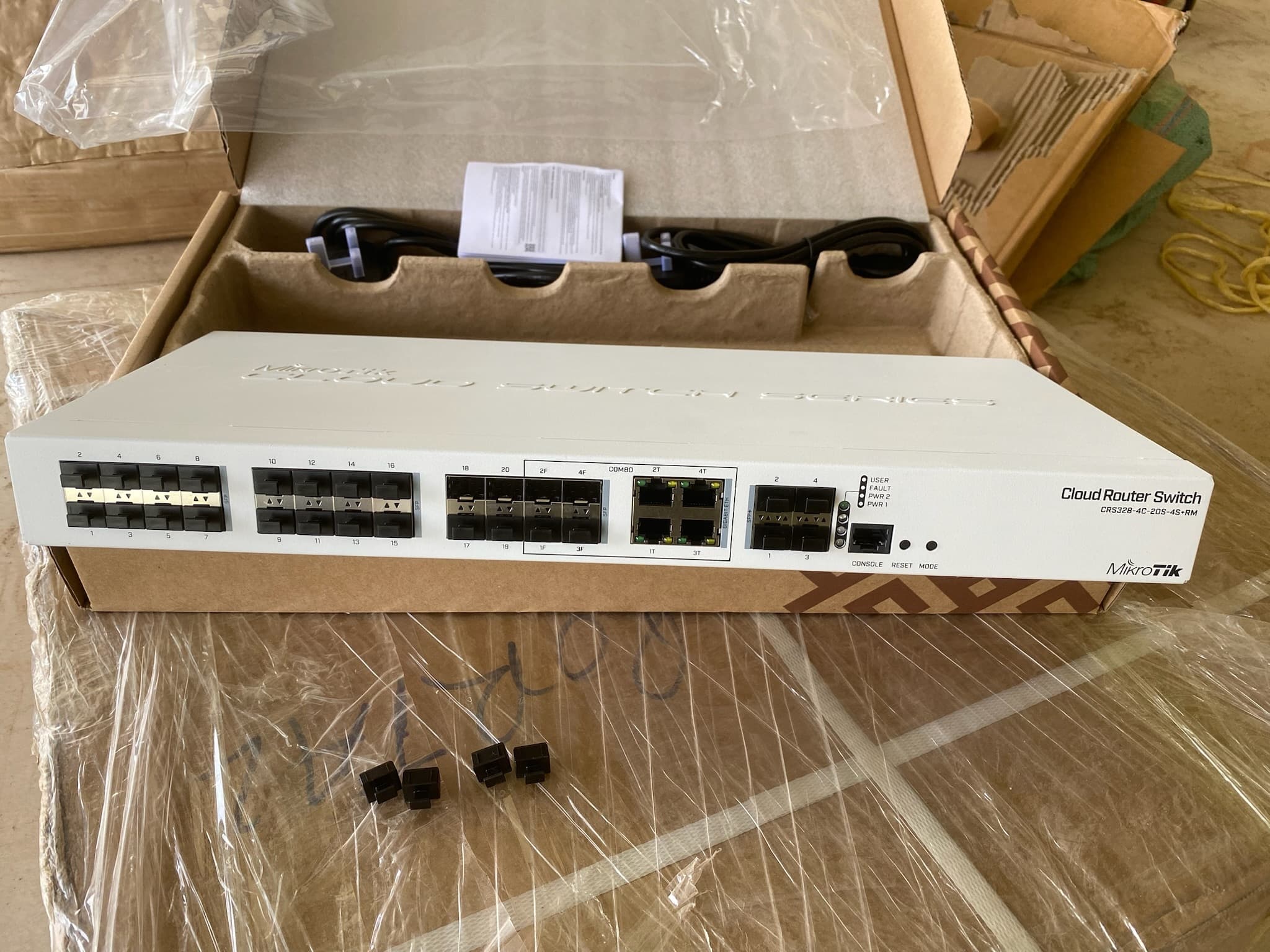
The network at each branch was redesigned with structured Cat6 cabling, a managed switch for POS and operational traffic, and a dual-WAN router providing automatic failover between a primary fiber connection and a secondary LTE connection. POS hardware was standardized to a single terminal model with consistent software across all branches. A cloud-based platform was deployed for centralized sales data aggregation, inventory management, and automated daily backup. Payment gateway integration was configured with timeout handling and automatic retry logic to reduce transaction failures during transient network issues.
Physical Deployment Breakdown
Quality Assurance
Fluke Certification & Verification
Every run, splice, battery bank, and VLAN tested against rigorous international telecommunications standards.
The Measured Outcome
All 6 retail branches now operate standardized POS hardware and software on certified Cat6 infrastructure with dual-WAN failover. Payment processing continues during ISP outages via automatic LTE backup. Sales data from all branches is aggregated daily to a centralized cloud platform, providing chain-wide visibility and off-site backup. Substandard cabling has been replaced and documented. The payment gateway integration handles transient network issues with automatic retry, reducing failed transactions.
Need a Similar Standard for Your Facility?
Book an on-site audit with Backspace engineers. We will analyze your infrastructure and deliver a tailored proposal within 48 hours.